
Understanding Watch Antimagnetism: Silicon Hairsprings and Faraday Cages
How horology engineered solutions against pervasive modern magnetic fields.
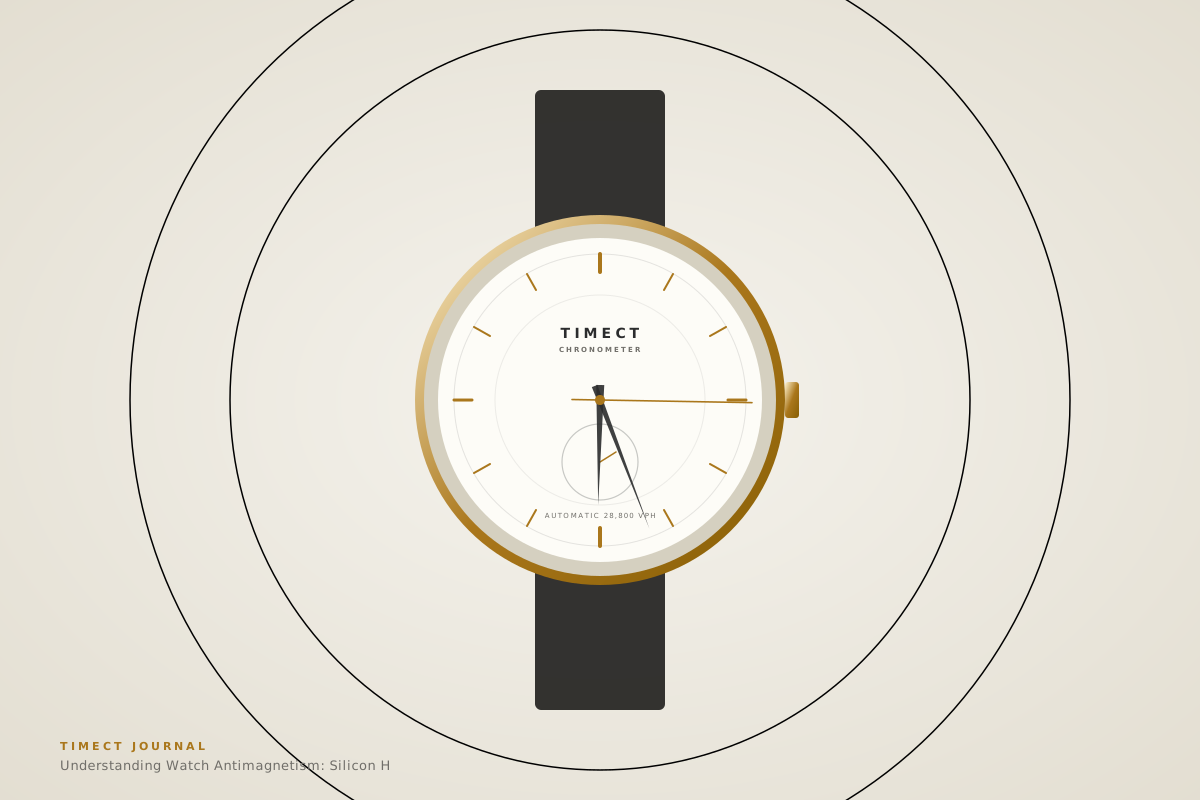
Antimagnetic watches resist magnetic interference either through passive shielding (a soft-iron Faraday cage enclosing the movement) or non-ferrous movement components like silicon (silicium) hairsprings and titanium balance wheels.
Silicon hairsprings are completely non-magnetic, corrosion-free, and thermally stable.
Horological Benchmark Specifications
Engineering Tolerances
Regulated in 3 to 5 positions; isochronism variance limited to +/- 4 to 8 seconds per day.
Material Composition
Austenitic 316L stainless steel, anti-magnetic alloys, synthetic sapphire with internal anti-reflective coating.
Escapement Frequency
28,800 vibrations per hour (4 Hz) or 21,600 vph (3 Hz) providing optimal balance longevity.
Preventative Maintenance Cycle
Pressure testing every 24 months; comprehensive ultrasonic overhaul every 4 to 6 years.
In-Depth Technical Evaluation: Micro-Mechanical Nuances
When assessing understanding watch antimagnetism: silicon hairsprings and faraday cages, the true differentiator lies in microscopic finishing and kinetic efficiency. The interaction between the balance hairspring and the pallet fork gems determines whether a timepiece maintains stability over multiple decades. High-grade synthetic rubies (corundum jewels) are polished to minimize frictional drag at pivot points, while synthetic epilame coatings prevent lubricant migration away from the escape wheel teeth.
Curator's Verdict & Acquisition Advice
For both aspiring enthusiasts and seasoned collectors, understanding the architectural pedigree behind this timepiece ensures lasting ownership satisfaction. Rather than chasing transient design trends, invest in pieces characterized by proportional harmony, serviceability of internal components, and transparent manufacturing provenance.
Editor's Summary Note
Horology remains one of the few physical crafts where traditional centuries-old hand finishing merges seamlessly with modern aerospace tolerances. Treat your timepiece with regular care, keep it shielded from high magnetic fields, and it will serve as a multi-generational companion.
Helpful answers
Frequently Asked Questions
Quick, practical guidance for the questions readers ask most often.
01How does magnetism harm a watch?
It magnetizes the balance spring coils, pulling them together and causing the watch to gain several minutes per hour.
02What should readers know about antimagnetic watches?
Antimagnetic watches resist magnetic interference either through passive shielding (a soft-iron Faraday cage enclosing the movement) or non-ferrous movement components like silicon (silicium) hairsprings and titanium balance wheels.
03Why does antimagnetic watches matter when choosing a watch?
It helps narrow the options to watches that suit your real needs, wardrobe, and daily routine. Use the article's core criteria as a shortlist, then compare fit, comfort, materials, and long-term versatility before deciding.
04What should beginners prioritize when considering antimagnetic watches?
Start with comfort, proportion, legibility, and how often the watch will be worn. A balanced, versatile choice is usually more useful than selecting a highly specialized design based on one feature alone.
05Is there one best option for antimagnetic watches?
No single option suits everyone. Wrist size, personal taste, dress code, climate, budget, and maintenance preferences can all change the right choice, so treat recommendations as a practical framework rather than a fixed rule.
Related Articles
View All →
Materials & Craftsmanship
Sapphire Crystal vs Mineral Glass: The Ultimate Crystal Guide
Materials & Craftsmanship
The Anatomy of a Watch Dial: Guilloché, Enamel, and Sunburst Finishes
Materials & Craftsmanship
Why Ceramic Bezels Have Revolutionized Modern Dive Watches

Materials & Craftsmanship